
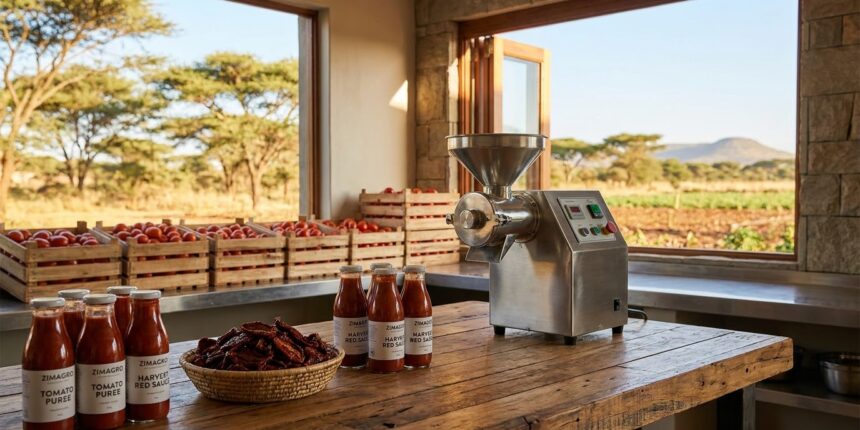
Tomato Processing Business in Zimbabwe: Puree, Sauces & Dried Tomatoes
Zimbabwe grows tomatoes, but here’s the question: how much more money could be made if those tomatoes were not simply sold fresh? When prices fall or farmers produce more than the market can absorb, tomatoes can spoil quickly. That problem could become a business opportunity through processing tomatoes into puree, sauces, paste and dried products.
Think about the tomato sitting in a farmer’s field today. Instead of rushing to sell it before it goes bad, a processor could buy suitable surplus tomatoes, wash them, sort them and turn them into products with a much longer shelf life. That means the business is not only selling tomatoes—it is adding value to a crop Zimbabwean farmers already know how to produce.
Tomato puree and cooking sauces could target households, restaurants, takeaways, schools, hotels and food manufacturers. Zimbabwean entrepreneurs could also develop sauces with local flavours, creating brands designed specifically for the local market rather than simply copying imported products. Packaging, branding and consistency would be critical to building customer trust.
Dried tomatoes offer another angle. Sliced tomatoes can be dehydrated and packaged for use in cooking, restaurants and food manufacturing. Drying can significantly extend shelf life and reduce dependence on refrigeration. This could be particularly interesting for entrepreneurs operating in areas where electricity is unreliable and large cold-storage systems are expensive.
And here is where the opportunity gets interesting: you don’t necessarily need to own a tomato farm. A processor could buy from several farmers, creating a local supply network. Another entrepreneur could provide transport. Someone else could supply bottles, jars, sachets or labels. A cooperative could collectively supply tomatoes to a processing facility.
Equipment can also create opportunities. International suppliers, including Alibaba, offer tomato processing equipment ranging from small pulpers and sauce-making machines to larger washing, crushing, cooking, filling and packaging systems. Entrepreneurs could operate the machinery themselves, provide processing services to farmers, or eventually become equipment suppliers. Imported equipment costs must include freight, duties, installation, power requirements and maintenance.
Zimbabwe’s unreliable electricity also changes the equation. A serious processing operation could investigate solar power, batteries or other backup systems, particularly for equipment, pumps, refrigeration and packaging. Water availability is equally important because food processing requires reliable access to suitable water and proper sanitation.
The bigger opportunity is to stop thinking of tomatoes as just something sold by the bucket. Think farmer → collection → processing → packaging → brand → supermarket → restaurant → consumer. Every stage can create a business. If Zimbabwe can grow the tomatoes, entrepreneurs can look for ways to capture more of the value before the product reaches the customer’s plate. For more Zimbabwe business ideas and opportunities, visit Zimmarketplace.com.
